

Kundalini Yoga
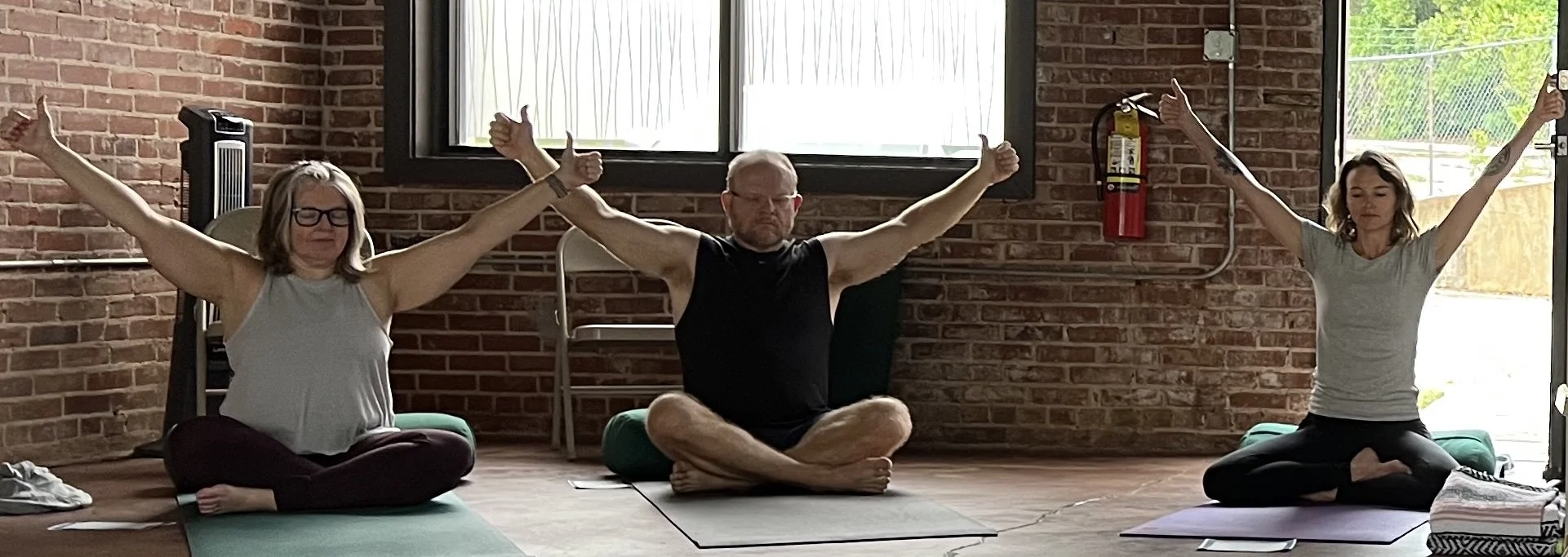

Hanley Bradfield, Kundalini Yoga Teacher
A Different Kind of Practice
A lot of what we offer at Hillside works with stillness — settling in, breathing, letting things quiet down. Kundalini works differently. It's active. It layers movement, breath, sound, and focus together in the same practice, rather than asking you to sit with just one of those at a time.
The heart of a Kundalini class is the kriya — a specific sequence of movement, breathwork, and mantra, each one built to do something particular. A class usually moves through an arc: tuning in, warming up the spine, the kriya itself, deep relaxation, then a closing meditation. It can feel like a lot is happening — because it is. That's the point.
If Yoga Nidra is about doing less on purpose, Kundalini is about doing something very specific on purpose. Both get you to the same place — connection, clarity, coming back to yourself — by very different roads.

Backed by Research
This isn't just a feeling — Kundalini has a real body of research behind it. Studies show meaningful support for:
Anxiety. A NIH-funded randomized trial found that 12 weeks of Kundalini Yoga outperformed a standard stress-education program on multiple measures of anxiety.
Emotional wellbeing. A randomized controlled trial found that regular practice improved emotional expression and self-compassion in a university population.
Memory and brain health. UCLA researchers found that Kundalini Yoga produced measurable anti-inflammatory and neuroplastic effects, and a separate review of five clinical trials found consistent improvements in memory and executive function among older adults.
Stress resilience. A pilot trial found participants saw greater improvements in sleep, anxiety, and stress compared to a waitlist control group.
We're not going to tell you it cures anything — but the research is real, it's growing, and it's one more reason this practice has stuck around.
Accessible to Every Body
Kundalini doesn't require you to get down on the floor. Every kriya can be adapted to a seated practice — in a chair or cross-legged, whatever your body needs that day. If you have limited mobility, an injury, or just prefer sitting, you'll still get the full arc of the class: breath, movement, sound, and rest.
What to Expect
Come as you are — no experience with Kundalini, or yoga generally, required, and no need to sit or move a particular way. You'll move (or stay seated), breathe, chant a little, and rest. It's more active than a typical meditation class and more internally focused than a typical yoga class — somewhere in between, which is exactly where it's supposed to be.